Intro
Running, paddling, blogging, and dealing with an acoustic neuroma – one adventure (and mishap) at a time. Welcome to the behind-the-scenes chaos!
For many organisations — GP practices, PCNs, shared offices, community hubs, and multi-site teams — the honest answer is often “sort of”. A paper signing-in book. A spreadsheet. Someone’s memory.
None of those are reliable. None are real-time. And none inspire confidence when the CQC or fire service asks the question.
That gap is exactly why I built my own Check-In / Check-Out system.
The Problem: Knowing Who’s Inside Isn’t Optional
From a CQC perspective, knowing who is on site isn’t admin — it’s safety-critical.
It underpins:
Fire evacuation and roll calls
Staff welfare and duty of care
Incident response and investigation
Business continuity planning
Yet in reality, many organisations rely on systems that only work after the fact — or only work if people remember to use them.
Paper logs get ignored. Spreadsheets aren’t live. Access control systems don’t tell you who stayed late.
And when someone asks “who’s inside right now?”, the answer shouldn’t involve guesswork.
Design Goals: Boring, Simple, Reliable
This system was deliberately designed to be unexciting — because safety systems should fade into the background.
The core principles were:
No apps to install
No shared devices
No usernames to remember
No training required
No ambiguity
If a system needs explaining during an emergency, it’s already failed.
How the System Works
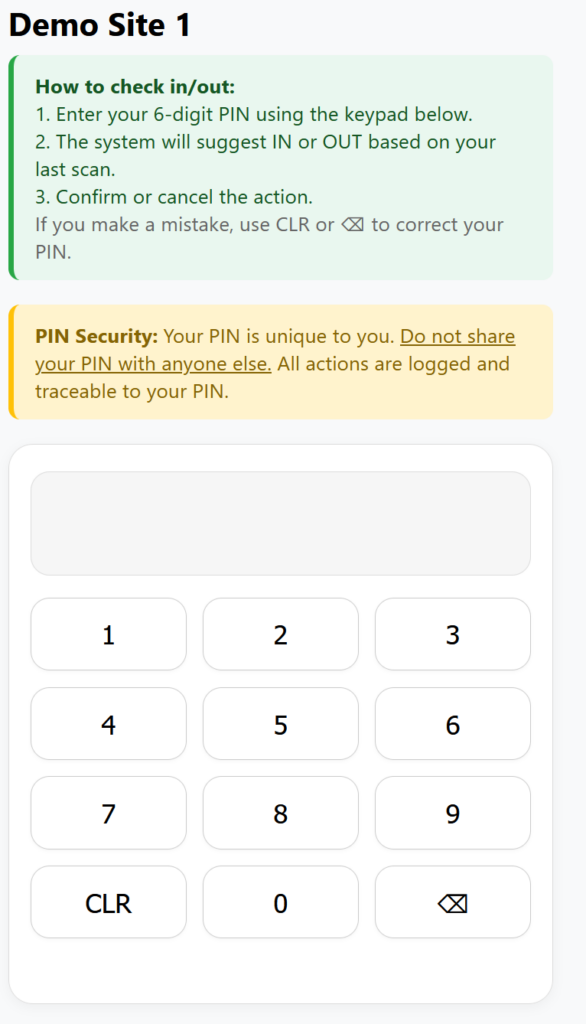
PIN-Based Check In / Out
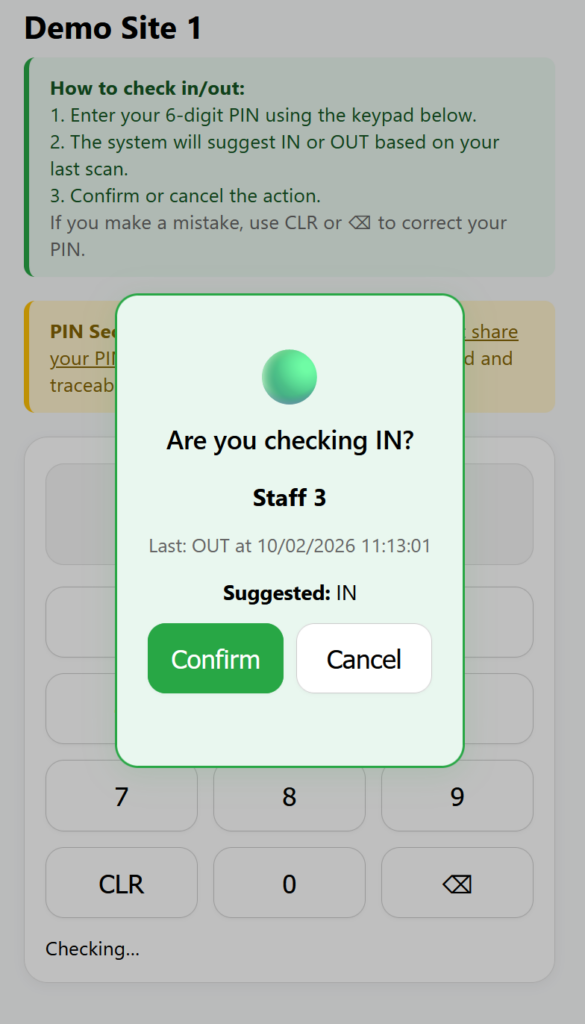
Each staff member is assigned a unique 6-digit PIN. They enter it on a shared screen or via a QR link on their phone.
The system automatically looks at their last recorded action and suggests whether they are checking IN or OUT.
No decision fatigue. No mistakes.
If the suggestion is correct, they confirm. If not, they cancel.
That’s it.
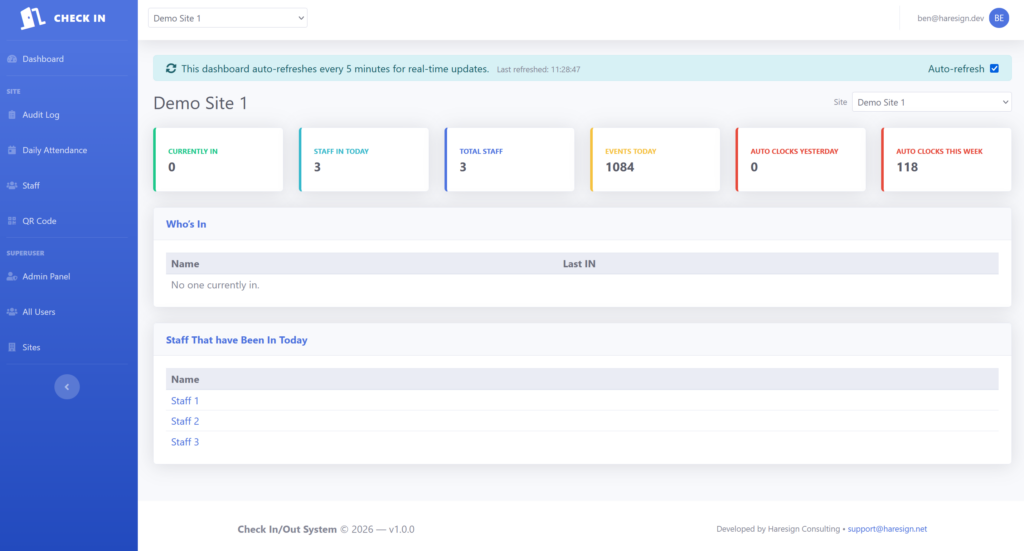
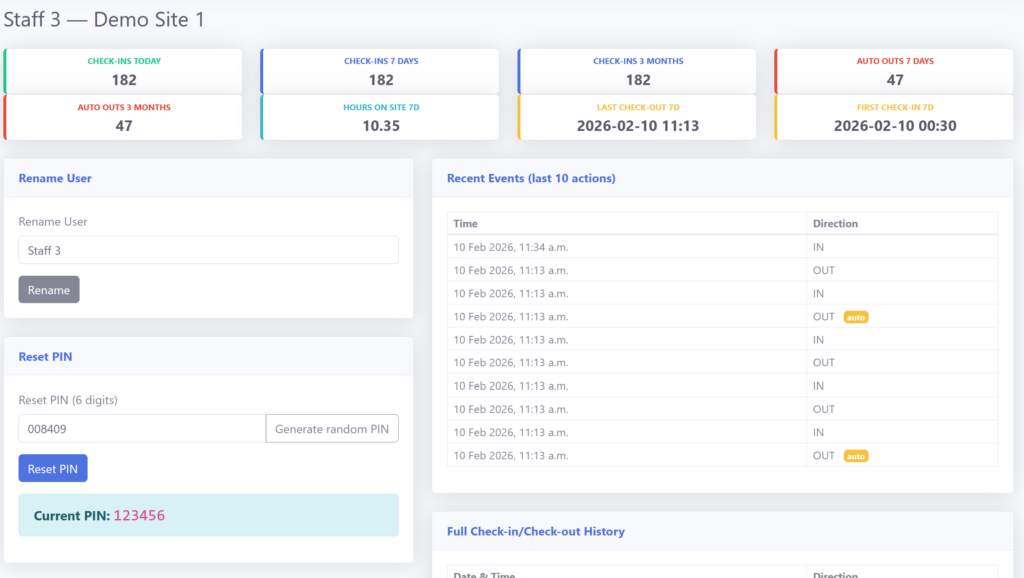
Real-Time Visibility for Managers
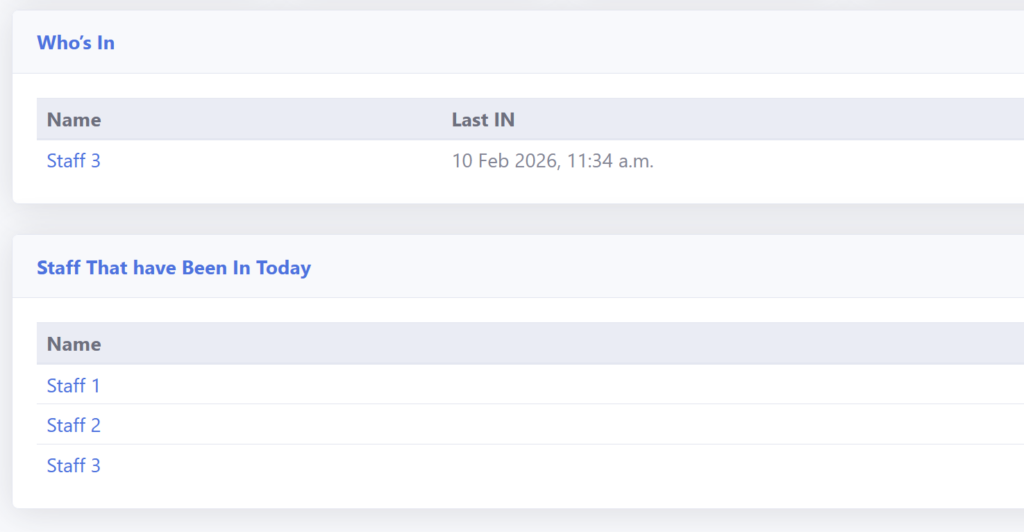
Managers can see, instantly:
Who is currently in the building
Who has been on site today
Total staff linked to the site
Number of attendance events
The dashboard refreshes automatically, keeping the view live without manual intervention.
This isn’t historic reporting — it’s real-time assurance.
Which, from a CQC perspective, is exactly the point.
Fire Evacuation: Designed for the Worst Day
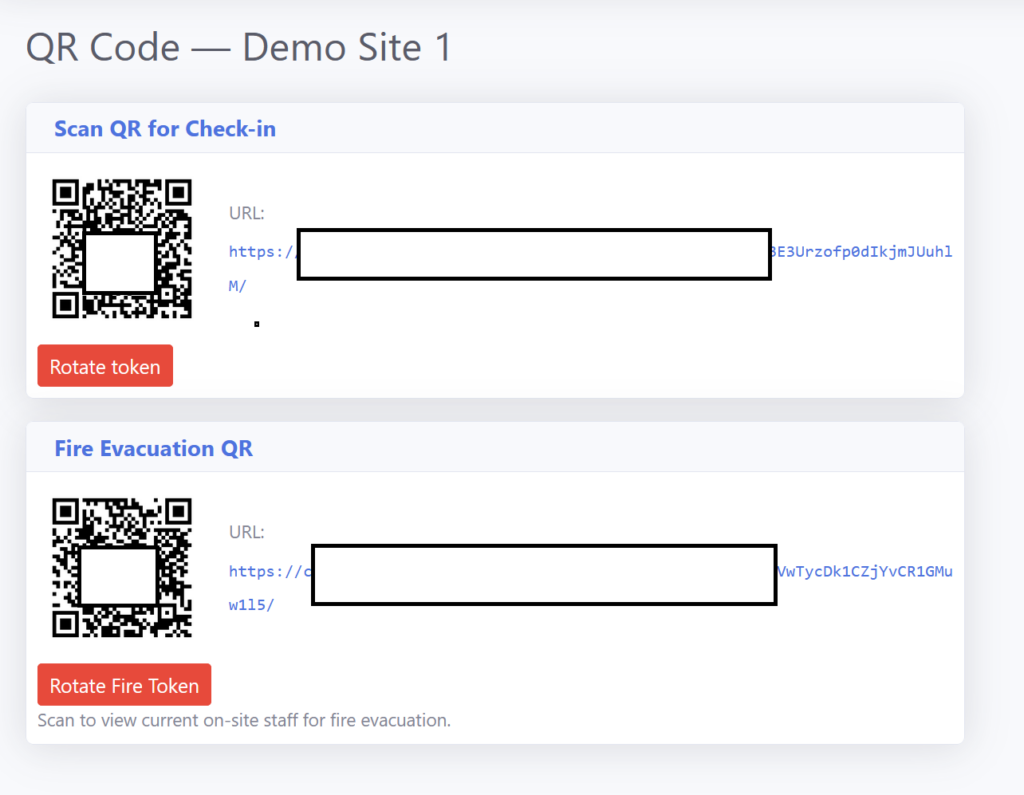
Every site has a dedicated Fire Evacuation QR code.
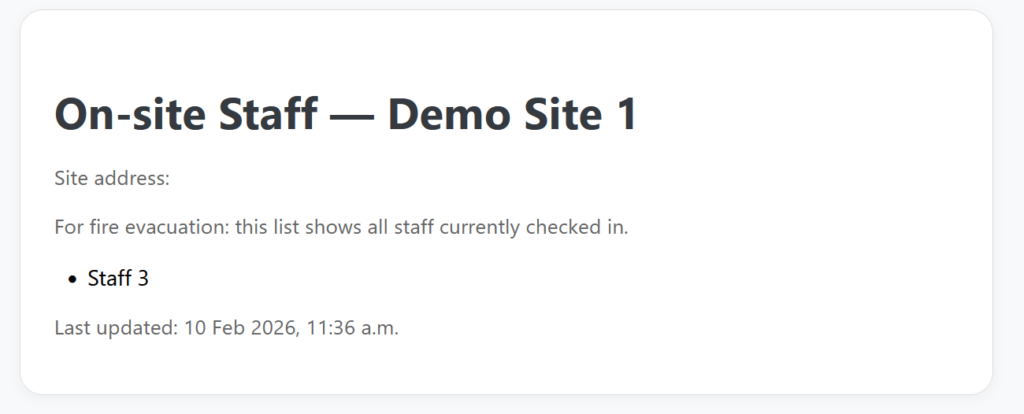
Scan it and you immediately see who is expected to be inside the building at that moment.
No login
No filtering
No admin access required
If you’re standing outside during an evacuation, this matters.
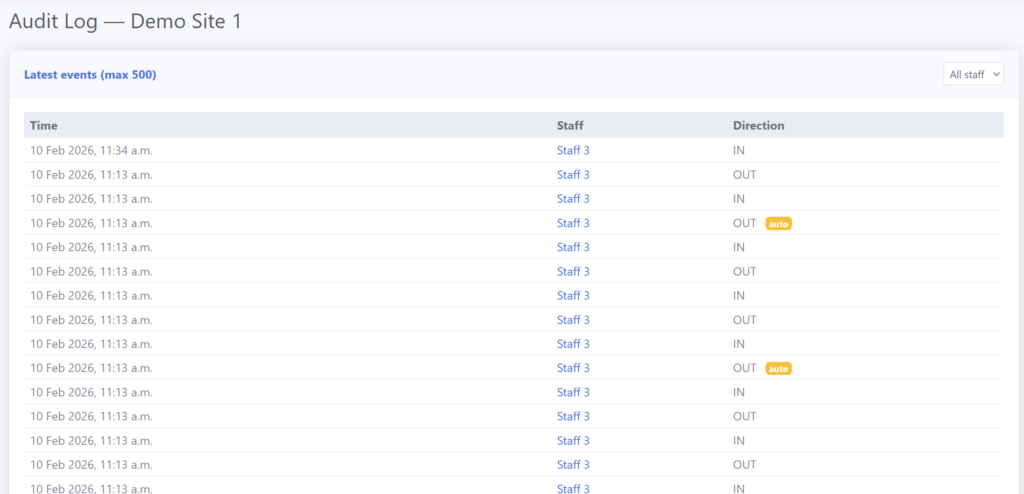
Full Audit Trail (Without the Pain)
Every action is logged automatically:
Staff member
Time and date
Site
Direction (IN or OUT)
This gives:
Clear accountability
Defensible records
Evidence for inspections
Protection for managers
Nothing is editable. Nothing relies on memory. Everything is traceable.
Managing Staff Without Complexity
Managers can:
Add staff
Generate or assign PINs
Activate or deactivate access
Invite site managers with role-based permissions
No spreadsheets. No shared passwords. No workarounds.
Why This Works for CQC
CQC doesn’t ask for flashy systems. It asks for assurance.
This system provides:
A clear answer to “who was on site at the time?”
Evidence that processes are followed consistently
A visible link between safety policy and daily practice
Confidence during inspections instead of scrambling
Most importantly, it works on a normal Tuesday, not just when someone remembers.
The Unexpected Bonus: Staff Buy-In
One surprise was how well staff took to it.
Because it’s:
Fast
Predictable
Non-intrusive
Clearly about safety, not surveillance
When people understand the why, compliance stops being a battle.
Final Thought
This system exists because I didn’t want to rely on hope, paper, or good intentions when it came to staff safety.
CQC requirements don’t need another policy document. They need a practical, visible, provable solution.
Sometimes the strongest answer to “how do you manage this?” is simply being able to turn the screen around and show it.
I’m a fitness enthusiast and Peloton addict who loves challenging limits through races, paddleboarding, and life’s adventures. Here, I share milestones, reflections on Acoustic Neuroma, and stories of resilience and growth.



No Comment! Be the first one.